Showing posts with label Latest Car Model. Show all posts

Aston Martin Vantage N420

0

Category: , , , , , , , ,

Ride along with the Aston Martin Vantage N420 in this video produced by Aston Martin.

BODY

Two-seat, two-door coupe or soft-cover convertible
Bonded aluminium structure
Aluminium, magnesium alloy, composite and steel body
Extruded aluminium door side-impact beams
Carbon Fibre Splitter and Diffuser
Carbon Fibre Side Strakes
Halogen projector headlamps (main beam)
High Intensity Discharge headlamps (dipped beam)
Clear rear lamps
N400 Sill Design
Vantage Badge with Graphitic Finish
Black Bonnet and Side Strake Meshes

ENGINE

All-alloy, quad overhead camshaft, 32-valve, 4735 cc V8
Front mid-mounted engine, rear-wheel drive
Fully catalysed stainless steel sports exhaust system with active bypass valves
Compression ratio 11.3:1
Max power 313 kW (420 bhp/426 PS) at 7300 rpm
Max torque 470 Nm (346 lb.ft) at 5000 rpm
Acceleration 0–60 mph in 4.7 seconds; 0–100 km/h (62 mph) in 4.9 seconds
Max speed 290 km/h (180 mph)

TRANSMISSION

Rear mid-mounted, six-speed manual gearbox
Alloy torque tube with carbon-fibre propeller shaft
Limited-slip differential
Final drive ratio 3.909:1

STEERING

Rack and pinion, power-assisted steering, 3.0 turns lock-to-lock
Column tilt and reach adjustment

WHEELS & TYRES

19” alloy wheels – 10 spoke forged alloy wheels with a gloss black and diamond turned finish
Front 8.5J x 19” Bridgestone Potenza 235/40 ZR19
Rear 9.5J x 19” Bridgestone Potenza 275/35 ZR19

SUSPENSION

Front Independent double wishbones
incorporating anti-dive geometry, coil springs, anti-roll bar and monotube dampers
Rear Independent double wishbones with anti-squat and anti-lift geometry, coil springs, anti-roll bar and monotube dampers

BRAKES

Front Ventilated and grooved steel discs, 355 mm diameter
Rear Ventilated and grooved steel discs, 330 mm diameter
Radial-mounted four-piston monobloc calipers
Dynamic Stability Control (DSC)
Anti-lock Braking System (ABS)
Electronic Brakeforce Distribution (EBD)
Emergency Brake Assist (EBA)
Positive Torque Control (PTC)
Traction Control

INTERIOR

Full grain leather interior
Alcantara headlining
Embroidered “N420” seat logos
Sports Steering Wheel
Instrument pack with Graphite finish
Iridium interior with Piano Black or Double Apex alloy facia trim
Anodised Black treadplates
Carbon fibre ‘N420’ sill plaques
Electrically adjustable seats
Powerfold exterior mirrors
Dual-stage driver/passenger front airbags
Side airbags (Not lightweight seat)
Heated rear screen
Memory seats and exterior mirrors (three positions)
Automatic temperature control
Organic Electroluminescent (OEL) displays
Trip computer
Glass ECU
LED map-reading lights
Rear parking sensors
Tyre-pressure monitoring *1
Alarm and immobiliser
Remote-control central door locking and boot release
Cruise control
Bluetooth telephone preparation
Auto-dimming interior rear-view mirror *1
Front and rear parking sensors
Battery disconnect switch
Volumetric and Perimetric Alarm System with tilt sensors

IN-CAR ENTERTAINMENT

160 W Aston Martin Audio System with six-CD autochanger
Integrated Apple iPod® connector *2
USB connectors with Waveform Audio Format (WAF), Windows Media Player (WMA) and MPEG
(MP3) audio file compatibility

OPTIONS

Alcantara seat inserts (Coupe only)
Sportshift3 automated manual transmission
Alternative brake caliper finish – black, red, silver
Second glass key
Lightweight seats
Heated seats
700 W Aston Martin Premium Audio System with Dolby® Pro Logic II®
1000 W Bang & Olufsen BeoSound Audio System
Garage door opener *1
Hard Disk Drive (HDD) satellite navigation system *1
Satellite radio system (USA only)
Tracking device *4
First-aid kit
Ashtray and cigar lighter
Boot-mounted umbrella

DIMENSIONS

Length 4380 mm (172.5”)
Width 1865 mm (73.5”) excluding mirrors; 2025 mm (80.0”) including mirrors
Height (Coupe) 1255 mm (49.5”)
Height (Roadster) 1265 mm (50.0”)
Wheelbase 2600 mm (102.5”)
Front track 1570 mm (62.0”)
Rear track 1560 mm (61.5”)
Turning circle (kerb to kerb) 11.1 m (36.5 ft)
Boot capacity (Coupe) 300 litres (10.6 cu ft)
Boot capacity (Roadster) 144 litres (5.0 cu ft)
Fuel tank capacity 80 litres (17.6 UK gal/21.1 US gal)
Weight (Coupe) ???? kg (???? lb)
Weight (Roadster) ???? kg (???? lb)

FUEL CONSUMPTION5 – Manual

Litres/100 km (mpg)
Urban 19.1 (14.8)
Extra-urban 10.0 (28.3)
Combined 13.3 (21.2)

FUEL CONSUMPTION5 – Sportshift3

Litres/100 km (mpg)
Urban 18.7 (15.1)
Extra-urban 9.2 (30.7)
Combined 12.7 (22.2)

GAS MILEAGE (North America only) - Manual

City 12 mpg
Highway 19 mpg

GAS MILEAGE (North America only) - Sportshift3

City 14 mpg
Highway 20 mpg

CO2 EMISSIONS5

315 g/km – manual
300 g/km – Sportshift *3


Read more...
Jaguar C-X75 Concept

0

Category: , , , , , , , ,

Jay Leno Drives the Jaguar C-X75 Concept

Consummate car guy Jay Leno gets behind the wheel of the stunning Jaguar C-X75 Concept that debuted at the 2010 Paris Auto Show.


Read more...

2011 Dodge Durango

0

Category: , , , , , , , ,

Motor Trend editor-in-chief Angus MacKenzie takes a look at the 2011 Dodge Durango Citadel at the Dodge stand at the recent SEMA show.


Read more...

Paris Auto Show - Top Head-Turning Concept Cars

0

Category: , , , , , ,

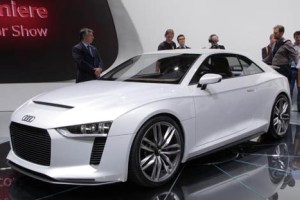
Audi Quattro Concept

Audi Quattro Concept

Audi reinvented the art of rally driving when the all-wheel-drive Quattro racing car arrived in 1980. Incredibly fast, but with the stability that comes from having four driven wheels, the Quattro was a star of the racing world that spawned, in 1984, the equally legendary road-going Sport Quattro. The only strange thing about the Audi Quattro Concept shown in Paris is why it took the German automaker so long to revive the famous model.


An Audi spokesperson explained that the Quattro Concept’s chassis originally began as the platform for an RS 5 coupe. However, the steel structure was replaced with lightweight aluminum, and the wheelbase shortened by 5.9 in. The chunky-looking, 2-passenger Quattro Concept is powered by a longitudinally mounted 400-horsepower 2.5-liter 5-cylinder (borrowed from the Audi TT RS).


If the Quattro makes it to production—which seems highly likely—expect it to fit between the range-topping TT and base versions of the mid-engine R8.


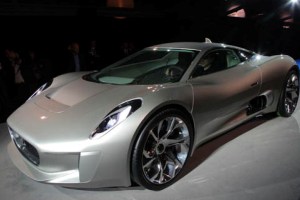
Jaguar C-X75

Jaguar C-X75
Jaguar C-X75

We’d love the Jaguar C-X75 even if it were powered by a pair of AA batteries, it’s that good-looking. Incredibly, we overheard some naysayers at the Jaguar stand who questioned the C-X75’s design. Frankly speaking, they’d better visit an optometrist. Jaguar has gotten the shape spot-on with this mid-engine beauty.


Even better, this kitty is more than a pretty face. An electric powertrain is amped up (pun intended) by two gas micro-turbines. Hold on there George Jetson, because the spec sheet only gets better the more you read. The C-X75 has four electric motors—one in each wheel—that deliver the equivalent of 780 bhp and more than 1100 pound-feet of torque.


According to Jaguar’s estimates, the car accelerates from 0 to 62 mph in 3.4 seconds. A 68-mile electric range is boosted by the twin micro-turbines, for a total cruising range of 560 miles. Jaguar officials told us all this tech wizardry is slated for life in a laboratory, at least for several more years of testing.


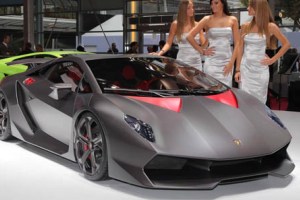
Lamborghini Sesto Elemento

Lamborghini Sesto Elemento

Raw and rude, the Lamborghini Sesto Elemento showcases the Italian sports car company’s use of carbon fiber. This raucously edgy sports car employs a new type of the lightweight material for its central tub called “forged composite.” Lamborghini has rights to the name and a hoard of patents related to this new material.


Rather than being layered, like traditional carbon fiber, chopped fiber is put into a stamp and (according to Lamborghini officials) the finished chassis tub is complete in only eight minutes. The entire car weighs 2200 lb. It even has carbon-fiber wheels.


A V-10 engine and permanent all-wheel-drive are borrowed from the Gallardo. In terms of overall proportions, the Sesto Elemento has more in common with the “baby Lambo” than the company’s larger, range-topping MurciĆ©lago. Lamborghini did coyly tell us it would consider building the Sesto Elemento—strictly a concept car at this writing—so long as the potential owner had deep enough pockets to foot the bill.


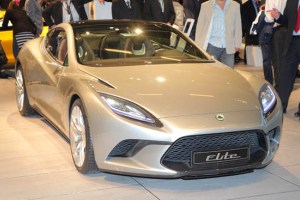
Lotus Elite

Lotus Elite
Lotus Elite

We’re still scratching our heads over why Lotus decided all the cars it unveiled in Paris needed some celebrity to help pull off the dust cover. Naomi Campbell, Mickey Rourke and Stephen Baldwin looked equally confused as to what they were doing at an auto show—that is, other than collecting a hefty check for a non-speaking role.


When the strangest press conference of the day finally ended, the cars (thankfully) spoke for themselves. While it would be easy to give top marks to the Lotus Esprit Concept, we’ll go out on a limb and give the nod to the Elite. Hey, let’s face it, you expect the 2-passenger Esprit to look like a million bucks…and it does. Job well done, Lotus.


But grafting sporty lines onto a notoriously awkward 2+2 passenger layout is always difficult. Lotus balanced the extra seating and streamlined styling beautifully. The front-engine, rear-drive Elite is powered by a 620-bhp 5.0-liter V-8. An optional KERS hybrid system should also be available when the car goes on sale in 2013.


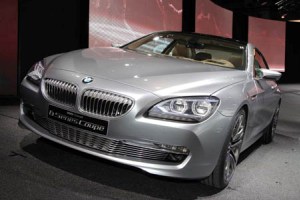
BMW 6 Series Concept

BMW 6 Series Concept

This big BMW coupe squeaked onto our list, despite some serious reservations about the “concept” part of its name. What you’re looking at is the next 6 Series coupe, plain and simple. And to be honest, we love the end result. The awkward humps and bumps of the previous generation have been smoothed over and modernized.


The rear end of the 6 Series is particularly more refined (i.e., less lumpy) than the previous model. A more aggressive front end and sharp side creases add extra attitude. It might not be a concept in the strict sense of the term, though we can’t argue that the next 6 Series is going to be a looker.


Engine choices will include BMW’s 300-bhp single-turbo inline-6 and twin-turbocharged V-8. A highly tuned version of the turbo V-8 should find its way under the hood of the next M6. Look for the 6 Series to arrive in the U.S. next year, and looking exactly like this concept version.


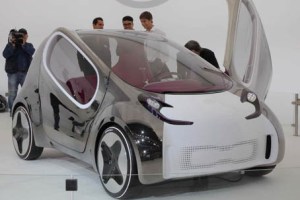
Kia Pop

Kia Pop
Kia Pop

To prove that we have sense of humor—and admire a healthy dose of bravery—we simply had to include the Kia Pop electric car. Okay, we’d prefer to see the Lamborghini Sesto Elemento or Jaguar C-X75 parked in our driveway. But if electric cars represent the future, let’s at least have some fun until we get there.


Whereas the upcoming Nissan Leaf EV was kept almost painfully bland—so as not to alienate everyone but the hippest of tech-loving early-adopters—the Kia Pop is anything but a shrinking violet, despite its tiny size. Yes, the chrome finish of this concept would make keeping it clean a nightmare. Yet we couldn’t help but smile at those wacky-looking side windows and doors that swing up and out.


The purple interior takes some serious getting used to. So would an estimated top speed of only 87 mph and a driving range of 100 miles. The Kia Pop EV is far from perfect and definitely risky. But isn’t that what concept cars should be all about?


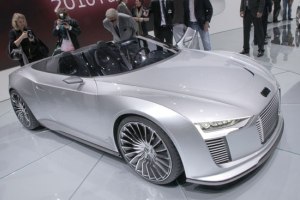
Audi eTron Spyder Concept

Audi eTron Spyder Concept

This is the open-top version of the 2-seat eTron coupe shown earlier this year at Detroit. The Spyder features a cut-down windscreen and is actually a plug-in hybrid with a mid-mounted 300-bhp twin-turbo V-6 diesel to boost power and extend the vehicle’s range. Weighing just 3196 lb., the eTron has two electric motors that propel this sports car to 62 mph in 4.4 seconds, while top speed is electronically limited to 155 mph. In pure electric mode, the eTron has a range of about 30 miles, while the diesel enables the vehicle to travel more than 600 miles before refueling.


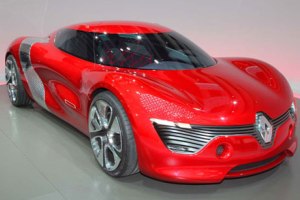
Renault DeZir Concept

Renault DeZir Concept

This first show car from Renault’s new design director Lauren van der Acker is a 2-seat pure electric sports car called the DeZir. The capital Z in the name refers to Renault’s new ZE line of electric motors—in this case it’s a 150-hp unit that accelerates the 1800-lb. car to 62 mph in about 5 seconds. Contributing to the car’s light weight is its Kevlar body, and the sleek shape gives the car an ultra-low 0.25 coefficient of drag. The rear-drive DeZir has a range of about 100 miles between charges. The car is also equipped with a Kinetic Energy Recover System (KERS) developed by the Renault Formula 1 team that provides regenerative braking.


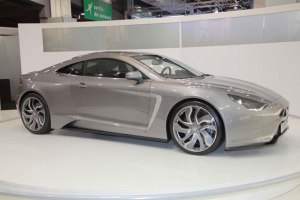
Exagon Furtive-eGT

Exagon Furtive-eGT
Exagon Furtive-eGT

The latest entry into the range-extended sporty car market is the French-built Exagon Furtive-eGT, which is slated to go into limited production in 2012. Powered by lithium-ion batteries, the Furtive-eGT has an electric-only range of 160 to 250 miles, while an optional gas engine can extend that range to 500 miles. Exagon says the car is capable of 0 to 62 mph acceleration of 3.5 seconds and that the car has a top speed of 178 mph. The company hopes to build about 100 cars a year when it goes into full production. Unlike most EVs that use the motors to directly drive the wheels, the Furtive-eGT uses a 3-speed paddle-shift gearbox attached to a mechanical auto-locking differential.


Read more...

Going Green and Save Money

0

Category: , , , , , ,

1. Stop the energy leaks from your home. Just over a fifth of U.S. energy consumption happens at people's homes, says the Department of Energy. That costs the average homeowner $2,400 a year. Half of that goes to heating and cooling, much of which is pure waste. Insulate ceilings and walls. Seal cracks and gaps. "Often people have so many small leaks around the home that it's the equivalent of having a three-foot by three-foot window wide open," says Kateri Callahan, president of the Washington-based nonprofit Alliance to Save Energy.

2. Change your light bulbs. The typical household has 46, says the Department of Energy. But only five of them are energy-efficient compact fluorescents. These can cut light bills by 75%. Don't like CFs? Matt Patsky, veteran green investor and the CEO of Trillium Asset Management, says new LEDs are much better still. They cut energy use by 95% and emit a much softer light. They're more expensive, but prices are coming down pretty quickly.

3. Stop heating an empty house. Or a house when everyone is asleep. Get programmable thermostats. They can cost as little as $50. "They typically pay for themselves in three months," says ASE's Ms. Callahan. They can cut your heating and cooling bills by 10%, she says, without any effect on your comfort at all. Turning down the thermostat in winter (and up in summer) a little helps too: Experts say each degree can trim 2%-3% from your heating bill.

4. Rethink your appliances. Replace any old ones with new, energy-efficient models. The older your current fridge or washing machine, the faster the payback. The more efficient models today have an EnergyStar seal from the Department of Energy. They typically use about 30% less power than a model without the seal, experts say (more details at wwww.energystar.gov). As for your TV: The bigger the screen, the more power it's using. How big do you need? Do you really want to see, say, a life-size Snooki when you're watching "Jersey Shore"?

5. Stop leaving your computers and home entertainment systems on standby overnight. The screen's black but they're still sucking power, needlessly. Power strips make it easier to switch everything off at once, and new smart strips make it easier, for example, to power down the TV while leaving the TiVo connected.

6. Make the most of your green taxpayer incentives. For example, Uncle Sam is offering to pay up to $1,500 of your costs on things like insulation or better-insulated windows, although the program expires at the end of this year. Your state government may provide additional incentives. The best overall guide to these deals is available at DSIRE, the Database of State Incentives for Renewables & Efficiency.

7. Tackle your hot water heater. It's one of your biggest energy users. Put insulation around the heater and the pipes. And dial down the thermostat. They are often set at 140 degrees. That's way too high: The Energy Department suggests turning it down to 115 to 120 degrees instead.

8. Drive a more-efficient car. How wasteful are we on the roads? I once watched a young woman drive through the cobbled streets of Boston's historic North End in a monstrous, gas-guzzling Hummer. She looked sillier than Michael Dukakis in that tank. What are we thinking? Super-efficient hybrids can be pricey, but Jessica Caldwell, director of pricing and analysis at car experts Edmunds, says there are a lot of deals around at the moment that can bring the price down. And you don't have to go hybrid: Ms. Caldwell notes the small Nissan Versa gets 29 miles to the gallon and only costs $16,000.

9. Get a home energy audit. The price of these has come down. For a few hundred dollars, experts using high-tech gadgetry, infrared scanners and computer models will analyze your home, work out in detail all the ways it's wasting energy and tell you what you can do to stop it. As the average home uses about $2,400 worth of energy per year, the payback is often impressive. Matt Golden, chief executive of San Francisco-based specialists Recurve, says he often finds he can cut bills by 20% to 40% just by eliminating waste. An audit can also help you rethink your heating and water systems, and identify possible sources of renewable energy, from solar paneling to a geothermal heat pump, that can help the environment and may save you money over time. Check for firms accredited by the trade body, the Building Performance Institute.

10. Buy an e-book reader. If you read a lot, they are very green. Traditional books, newspapers and magazines aren't: They do a lot of environmental damage, from cutting down trees to manufacturing and distribution. Emma Ritch, senior research analyst at the CleanTech Group, an environmental consulting firm, has done the numbers. Bottom line: A device like the Kindle has about the same impact on the environment as 23 books, or 280 newspapers, or 177 magazines, or some mixture thereof. So if you're going to use it to read more than that, you're helping the environment. By my reckoning, someone who buys a newspaper a day, a magazine a week and three books a month will break even by the fifth month.


Read more...

Do certain colors attract police?

0

Category: , , , , , , , , , , , , ,

In today’s era of radar and laser detectors—not to mention soulless speed cameras—the easy answer is no. Most police officers will explain that if you’re speeding, you’re going to be pulled over no matter the color of your car. But could law enforcement subconsciously be focusing on brighter colors, and red in particular?


They might be, at least based on research conducted by Dr. Mark Changizi, professor of Human Cognition at 2AI Labs. An evolutionary neurobiologist, Changizi’s online biography details his studies as a means to “grasp the ultimate foundations underlying why we think, feel and see as we do.”


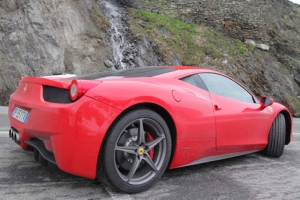
2010 Ferrari 458 Italia

According to his studies of primates, our eyes have evolved to detect subtle changes in blood oxygenation. In layman’s terms: we notice pigment changes when, for example, someone turns red with anger or pale with fright. “It’s all about emotions,” says Changizi. “Our eyes are designed to see these color changes.” Primates with less fur on their face and rump (such as baboons and chimps) can detect these pigment shifts.


Different emotional states depend on how oxygenated your blood is. “Red is a symbol of strength physiologically,” says Changizi, while mentioning recent studies that have proven wearing red sportswear leads to a higher probability of winning. Changizi says cultural factors also play an important role. Think about a red car, and chances are good a low-slung Ferrari or Corvette springs to mind.


Millions of years of evolution, along with some clever marketing, means that brighter colors (especially reds) could simply be hard-wired in our minds as being powerful, fast and strong. Just don’t try to wiggle your way out of a speeding ticket by telling a cop he was genetically programmed to ticket your little red sports car.


Read more...

Can color add or detract from a car’s value?

0

Category: , , , , , , , , , , ,

The simple answer is yes, especially if you plan on holding onto your car long enough for it to attain classic status. “Everybody talks about Resale Red,” says Mike Fairbairn, a founding partner at RM Auctions Inc. Red is perennially popular with buyers but, according to Fairbairn, not all colors are so lucky. “The other conventional wisdom is that you can’t sell green.”


Fairbairn advises owners—specifically those in the classic car world—to think carefully when choosing a color. “Choose a period color that people would consider iconic for that model.” A color should also apply to the type of car, with darker hues working well with formal luxury vehicles like a vintage Rolls-Royce.


For some makes and models, color can add enormous value. When it comes to 1960s-era muscle cars, Fairbairn says the whole vehicle is valued according to what color it was when it left the factory. “God help you if it was hideous green,” says Fairbairn with a chuckle. Whether the owner likes it or not, the car is more valuable in an unattractive but entirely original color scheme.


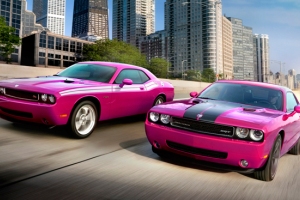
2010 Dodge Challenger R/T and Dodge Challenger SRT8
2010 Dodge Challenger R/T & Dodge Challenger SRT8

Fairbairn explains that buyers of certain classic Chrysler muscle cars, for example, will pay up to “one third more” for cars finished in wacky period colors like “Plum Crazy” purple. No wonder Chrysler brought back some of these lurid hues for its modern lineup of vehicles, including the Challenger coupe.


“Chrysler understands that there’s a strong emotional bond drivers can have with their cars, and color takes that feeling and personalizes it,” says Jim Parker, Head of Chrysler’s Exterior Color & Trim Studio. “Think about it; the color of a car can really make or break a great design.”


“When we developed the new Challenger tribute colors, we went back in our archives and found the original color standards that were developed in the late-60s for these wild colors,” says Parker. These Challenger tribute colors have included “TorRed,” “B5 Blue” and, of course, “Plum Crazy.”


“We're topping off the 2010 model year now by introducing a limited run of new Furious Fuchsia, a tribute to the outrageous 70’s color Panther Pink,” says Parker.


Read more...

What are the most popular car colors?

0

Category: , , , , , , , , , ,

“The most popular color in North America for the past three years is white,” says Nancy Lockhart, Color Marketing Manager for DuPont Vehicle Paints. “We’ve also seen that, globally, black has gained in popularity.” Lockhart credits growing consumer interest in metallic and pearl-coat finishes with boosting the appeal of these two colors.


According to DuPont’s annual “Color Popularity Report,” silver remains the most popular choice worldwide. However, more shocking colors are making inroads. “We’re seeing a rise in purple globally,” says Lockhart. “Orange has also been a color space that has really taken notice the last five years.”


1970 Plymouth AAR 'Cuda 2D

Emerging markets like China and India will soon influence car color palettes here in North America. Michelle Killen, Exterior Color Designer for General Motors, predicts a distinctly rose-tinted future. “A trend that is starting to make its way here from China is the use of "pink" or "fuchsia," says Killen. “You are going to start seeing this used more in North American and European markets.”


Killen says she relies on “everything” when studying the next must-have colors. “I use fashion for the "what's hot right now" and for longer term or further into the future I like to use trend sites.” Furniture, product design and architecture all influence the colors GM offers, says Killen. “We are still seeing orange as a "hot" color space. Orange has really become a staple in exterior paint design.”


Read more...

Do insurance companies charge higher rates for bright colors?

0

Category: , , , , , , , , , ,

It sounds silly, but the idea of paying higher insurance rates for a brightly colored car has been around for years. Let’s finally put it to rest. It’s not true and, according to insurance industry experts, it never has been.


“I’ve never heard of a company that does” charge more for a certain color, says Jeanne Salvatore, Senior Vice President Public Affairs at the Insurance Information Institute. “They’re looking at theft records and safety records…make and model, and expense to repair.”


“It’s a myth,” says Luz Correa, Public Affairs Specialist for State Farm Insurance in Metro New York. “[Car color] is not something that goes into a rate.”


Read more...

The Truth About Car Colors

0

Category: , , , , , , , , , , , , ,

Henry Ford certainly made things easy when he stipulated that customers for his rugged Model T could have any color they wanted, so long as it was black. Today’s car buyer faces a vastly more complicated decision-making process when choosing the paintjob for his or her new vehicle.


There’s no way of knowing whether Mr. Ford would have approved of the eight colors currently available with the 2011 Fiesta SE subcompact sedan. Our guess is “Tuxedo Black” might have won his approval—although “Lime Squeeze Metallic” would probably have cost someone his job.


Things only get more complex the higher up the automotive food chain you go. The $330,000 Bentley Mulsanne luxury sedan is available in more than 100 exterior shades. Customers can also order a customized color, should they so desire. During this year’s New York Auto Show, a Bentley representative described the company’s recent efforts to color-match everything from 1950s kitchenware to gowns worn by royalty.


We’re here to present today’s most popular car colors, some dos and don’ts when it comes to choosing a paintjob, and a peek at the hottest colors coming in the future. Along the way—aided by science and industry experts – we’ll attempt to debunk a few common myths related to car color.


Can you be charged higher insurance rates for a car with a bright paintjob? Do police really prefer ticketing red cars? Keep reading to find out…


Read more...